Finally, I completed the work I needed to do to complete my A Year in Indochina project and the whole experience remains an incredibly valuable one to me. I often look back on the time I spent in Vietnam and am overwhelmed by the things I did and the opportunities I had there. It has been an incomparable experience for me and one that I am incredibly grateful for. I finished the book I was working on, thereby completing the project, in the first few months of starting a History degree at the University of Liverpool; now I am half-way through that degree.
But obviously I couldn't stay in one place for too long. Through my desperation to travel again, some hard work and some good fortune, I was granted the opportunity to spend a semester studying in Melbourne, Australia. My new adventure begins in just under a week when I set off on a journey across the world, and I have created a new blog called Backpacker Student with which I will record my travels, studies and new experiences Down Under. I hope that those people who took interest in this blog will be equally interested in my new one, and I hope I will have some interesting stories and new discoveries to share from a totally different part of the world!
Tuesday, 27 January 2015

Thursday, 5 September 2013
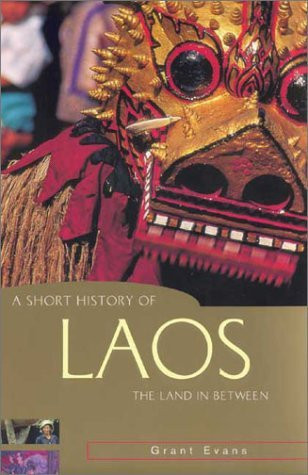
Book review: A Short History of Laos
A Short History of Laos: The Land in Between
Grant Evans, 2003
 |
| Click here to buy this book |
Laos, the ‘land of a
million elephants’, is a small, landlocked country bordered by
China and Myanmar to the north, Vietnam to the east, Cambodia to the
south and Thailand to the west. Throughout its history this
‘backward’ country, seen as ‘passive’ and ‘sleepy’, has
been dominated by the greater powers that neighbour it and those
further afield that saw their colonial and imperialist interests
here. During the Vietnam War Laos found itself in a key strategic
position, taken advantage of both by the DRV, which ran its major
north-south supply line, the Ho Chi Minh Trail, through the eastern
reaches of Laos, but also by the Americans, who used the Lao
highlands as a base for reconnaissance missions, often recruiting the
support of montagnards and Thai missionaries for this.
The history of Laos is
likely to be the least understood of any country in Southeast Asia,
and Grant Evans, author of A Short History of Laos: The Land in
Between is keen to look beyond popular stereotypes about Lao
culture in order to relate impartially the unfortunate history this
country has endured and to examine some of the lasting consequences
of this:
“Visitors to Laos are
usually charmed by the people’s grace and good humour, and are
consequently prone to romanticise the country… but the idea of an
‘untouched’ Southeast Asian idyll has its flipside: Laos is one
of the least developed countries in the world. Thus, successive Lao
governments have been committed to ‘development’, and millions
upon millions of aid dollars have flowed into the country- too often
straight into the pockets of its leaders, and too often creating a
psychology of dependency… Unfortunately, the ‘untouchedness’ so
beloved by tourists is often a consequence of failed development
plans and enforced communist isolation for almost two decades”.
Certainly, Evans has done well to cast aside such romantic
misconceptions (which, as somebody who has visited the beautiful Lao
towns of Luang Prabang and Vientiane, I realise that it is easy to
establish from first impressions), in order to give real insight into
the problems the country faces.
A Short History of
Laos, first published in 2002 by Allen & Unwin, is one of
five works in the series A Short History of Asia, edited by
the experienced Asia hand Milton Osborne, author of eight books on
Asian topics. Other titles in the series cover Malaysia, Indonesia,
Cambodia and China and Southeast Asia. The collection was highly
recommended by American travel writer Bill Bryson, who commented, “I
cannot welcome this series warmly enough. It is sure to be a winner-
and much needed”. The book’s author, Grant Evans, is an
Australian anthropologist who has written widely on the subject of
Laos and Southeast Asia in general. Other titles of his include Lao
Peasants under Socialism (1990), Politics of Ritual and
Remembrance: Laos since 1975 (1998) and more recently, The
Last Century of Lao Royalty: A Documentary History (2012). He
currently works for the University of Hong Kong.
Personally, I found the
opening chapter of A Short History of Laos, which covers the
pre-colonial, dynastic period of Lao history, to be dry and
unexciting; but persevering through I was rewarded to find that this
is a great introduction to Lao history, written concisely and easy to
follow. Evans traces Lao history from the pre-modern era, through the
colonial period, the establishment of the LRG, civil war, the
American war, the establishment of the Lao People's Democratic
Republic (LPDR) in 1975 and on to more contemporary issues such as
the ascension of Laos into ASEAN, the dropping of the hammer and
sickle as the national emblem and the continuing persecution of
ethnic minority groups (many of whom were recruited by the CIA to
fight the communist Pathet Lao in covert operations).
It was particularly
interesting for me to learn of how Lao culture has developed in
response to changing political circumstances- for example, that it
was the French who encouraged the concept of a ‘nation’ to
develop within the hearts and minds of a diverse and dispersed
population, inadvertently leading to the birth of early Lao
nationalism which was later to challenge French hegemony. Or, that
it was the ill-considered channelling of US aid to the pockets of
army and government officials of the Lao Royal Government (LRG) that
introduced corruption to a largely Buddhist nation. Finally, Evans
looks at some of the enduring consequences of the country's history
on its society today- for example, in the field of education- and
comments on how this continues to affect Laos' development.
The book is advertised
as “an ideal introduction for tourists, business travellers and
students”. As someone who is studying Indochina, this sentiment
rang true for me as I found Evans' work very useful in providing a
quick, insightful overview to the history of Laos. It
is a balanced and interesting guide and I would certainly recommend
it to anyone keen to learn more about the country. Of course, this
edition (published 2003) is now ten years out of date, and I have
often found it challenging to find reliable and up-to-date
information about Lao issues that may provide some insight into more
recent developments in the country. In particular, I would be
interested to learn more about the current situation for the Hmong in
Laos, an ethnic minority group that challenged Lao communism during
the civil war and of which a large part fled en mass following the
communist takeover. It is reported that Hmong insurgents continue to
provide sporadic and small-scale resistance to the regime; but there
seems to be little information available to provide further detail to
substantiate these claims.
For further reading on
Laos, try Tragic Mountains: The Hmong, The Americans and the Secret Wars for Laos (1942-1992) by Jane Hamilton-Merritt; The Spirit Catches You and You Fall Down: A Hmong child, her American doctors and the collision of two cultures by Anne Fadiman or
Nightmare in Laos: The true story of a woman imprisoned in a Communist Gulag by Kay Danes.
For
more information about the recent history of Indochina, please refer
to my book reviews of The Vietnam War: A Concise International History by Mark Atwood Lawrence and The Pol Pot Regime: Race, Power andGenocide in Cambodia under the Khmer Rouge, 1975-1979 (Third Edition)
by Ben Kiernan.
Wednesday, 14 August 2013
Book review- A Dragon Apparent
A Dragon Apparent- Travels in Cambodia, Laos & Vietnam
Norman Lewis, 1951
 |
| Click here to buy this book |
The late Norman Lewis
(1908-2003) is a celebrated English writer who authored thirteen
novels and thirteen non-fiction works, mostly travel writing,
throughout his lengthy career. Perhaps best known for Naples '44
(published 1978) and The Missionaries (1988), one of Lewis'
seminal travel books was the much earlier A Dragon Apparent
(1951), a record of the author's travels around Vietnam, Cambodia
and Laos at the brink of the crumbling of France's colonial grip on
Indochina, and in advance of the disastrous American war that was to
follow.
The world that Lewis
captures is considerably bleak and forlorn. One of his first
impressions is of the disdain seemingly shown towards him, a
foreigner, by Vietnamese people, who were described by early
missionaries as inquisitive towards strangers. This seems to be a
suggestion of the damaging impact of colonialism, one of many signs
that Lewis notes as he travels across the peninsula, visiting tribal
villages, plantations and Viet Minh strongholds.
Lewis' travels take him
primarily through southern Vietnam, then still known as Cochin China,
with briefer visits to Cambodia and Laos. Unfortunately he is not
able to make it across the border to Tonkin, northern Vietnam, which
surely would have been an interesting visit. On his numerous trips
with French officers, Lewis meets communities of ethnic minority
groups and witnesses their plight to retain their traditional customs
within changing wider political circumstances. The tragedy of this
book lies in the knowledge that the moment in history seen by Lewis
was soon to be lost forever.
This special interest
in tribal groups is not unique to A Dragon Apparent. Across
his extensive repertoire of writings, Lewis is known for his interest
in tribal societies and for his concern over the damage caused to
them by outside influences, particularly through the activity of
missionaries. Notably, Lewis is known to have regarded his life’s
greatest achievement as being the outcome of his 1968 Sunday Times
article Genocide in Brazil, which resulted in a change in the
Brazilian law regarding the treatment of Indians, as well as the
establishment of the organisation Survival International, which
campaigns to defend the rights of tribal people around the world.
There are some
interesting cultural revelations to be learnt from Lewis' travels in
Indochina, due to his keen interest in the habits and lifestyles of
the people he sees. On first arriving in Saigon, he observes: “There
was a rapid, silently swirling traffic in the streets of bicycle
rickshaws mixed up with cycles; a bus, sweeping out of a side street
into the main torrent, caught a cyclist, knocked him off and crushed
his machine. Both the bus driver and the cyclist were Chinese or
Vietnamese, and the bus driver, jumping down from his seat, rushed
over to congratulate the cyclist on his lucky escape. Both men were
delighted, and the cyclist departed, carrying the wreckage of his
machine and still grinning broadly.”
As
the above passage demonstrates, Lewis has a dignified writing style
that suits his self-styled position as an outside observer of
everything he witnesses.
The
1982 edition of this book was published by Eland, a London based
publishing house that specialises in travel books. The edition
includes darkly printed photographs that were reproduced from the
first edition (the originals no longer existed), which, despite being
imperfect in quality, are nonetheless fascinating glimpses into the
tribal lives Lewis describes. In his preface, Lewis comments on his
travels in Indochina with the hindsight of the incredible destruction
it had endured in the years between the first and second publications
of this book. He writes hauntingly of “the greatest holocaust ever
to be visited on the East”: “It consumed not only the present,
but the past; an obliteration of cultures and values as much as
physical things. From the ashes that remained no phoenix would ever
rise”.
Despite the tragedy of
the destruction Indochina has endured, there is some comfort for the
reader of Lewis' work, particularly one who has spent time in each of
the three countries in question, to find that there are certain
places and scenes mentioned in Lewis' account that are seemingly
eternal elements of Indochina, transcending the passing of time and
the destructiveness of war. In some cases this is the sublime, such
as the beautiful ruins of the ancient kingdom of Angkor, and in other
cases the ridiculous, such as the Cao Dai temple erected in Tay Ninh
in 1926 as the holy centre of Vietnam’s most bizarre religion. The
latter was described by Lewis as probably “the most outrageously
vulgar building ever to have been erected with serious intent”,
and, incidentally, was described in similarly derogatory terms by
Graham Greene. Yet whether for better or for worse, it is comforting
to be reminded of these distinct, nostalgic characteristics and to be
reassured that at least some things have survived Indochina’s most
volatile period in recent history.
Published only four
years before Greene’s classic The Quiet American, it
is interesting to note that A Dragon Apparent has been
described as Greene’s inspiration. Greene was certainly a fan of
Lewis’, describing him as “one of the best writers, not of any
particular decade, but of our century”.
For his extensive
collection of works and the impact they have had, it is perhaps
surprising that Lewis is not better known as a writer. In the
Guardian’s obituary for him, published in July 2003, this is
accounted to the ‘modesty’ of this ‘deeply private’ author.
Certainly, in A Dragon Apparent, Lewis is never showy and
maintains a detached, civilized writing style. Yet for me, this lent
the book to lack any feeling of passion, and consequently I did not
find it to be particularly compelling. Nonetheless, as I have already
alluded to, there are several moments of intrigue from Lewis’
experiences in Indochina, from which I learned new things about the
culture of Indochina as it was before the wars. No doubt, A Dragon
Apparent is an important documentation of a pivotal moment in the
history of Indochina; a time and place at the brink of monumental
change that would leave it irrevocably scarred.
Tuesday, 30 July 2013
Book review- The Road of Lost Innocence
The Road of Lost Innocence: The true story of a Cambodian heroine who fled sexual slavery and now devotes her life to rescuing others
Somaly Mam and Lisa Appignanesi, 2007
 |
| Click here to buy this book |
Somaly Mam is a woman worthy of enormous admiration. Her autobiography, The Road of Lost Innocence, is an incredibly harrowing and eye-opening story as to the reality of the sex slavery industry in Cambodia and South East Asia in general. Mam has endured a shockingly abusive childhood; left by her parents from a young age, she was sold to a stranger by her only remaining relative to be wed into an arranged marriage and finally sold to a brothel. She has suffered unimaginable violence, rape and cruelty. Yet she asserts that her story is in no way atypical for a young Cambodian girl. The choice of subtitle for her book, The True Story of A Cambodian Childhood, pays testament to this reality. Mam’s writing paints a bleak and unforgiving portrait of Cambodian society, but she also offers insightful explanations into why the sex trade industry may continue to be so accepted and engrained in her native country. First published in France under the title Le Silence de L’innocence in 2005, the English version, translated by Lisa Appignanesi, was first published in 2007.
The Road of Lost Innocence is moving on many levels. Primarily, there is the raw pain of the injustice suffered by Mam, which is accentuated by her simple writing style and humble tone. Then there is the reminder of the amount of suffering endured by women and girls in South East Asia due to the prolificacy of the sex trade industry. It is thought that there are 11.7 million people in forced labour in the Asia Pacific region, the majority of whom are women and girls. Virgins are sold for high prices. Finally and perhaps most significantly, there is the admiration Mam inspires due to her work to counter these trends. Having escaped a life of forced prostitution, she co-founded AFESIP- Agir Pour les Femmes en Situation Précaire (Acting for Women in Distressing Circumstances). Her autobiography recalls the organisation’s inception from its humble origins as a small, overcrowded shelter in the outskirts of Phnom Penh to its current status as a multi-national body that operates across Cambodia, Laos, Vietnam and Thailand. The organisation is largely funded by the Somaly Mam Foundation (SMF), which was established in 2007 as “a funding vehicle to support victim services organizations, eradicate slavery through global advocacy, and to empower survivors to be part of the solution to end trafficking”.
Mam is now a globally recognised humanitarian figure due to her work to challenge the sex trafficking industry and to empower its survivors. She has received countless awards, including the Prince of Asturias Award for International Cooperation in 1998 and the Glamour Woman of the Year award in 2006. In 2009, she was named as one of TIME Magazine’s 100 Most Influential People and in 2011 was included in the Guardian’s Top 100 Women: Activists and Campaigners. Yet despite this worldly recognition, in her writing Mam remains very modest; she is frank about the lasting impact of her ordeal on her life today. In this way, it is a poignantly personal story and is very touching. Not only has she suffered physical and emotional abuse based on her gender, she has also endured racism from Cambodia’s majority Khmers because of belonging to an ethnic minority group, the Phnong, and having dark skin.
I found a considerable amount to learn about post-Pol Pot Cambodian society from this book. Most of this was uncomfortably negative. Mam suggests that the legacy of Pol Pot’s Khmer Rouge era has blown a hammer to family values and left a shattered society overly focused on the individual. Yet traditional views towards the role of women and girls remain: they are expected to unconditionally obey their parents and are often seen as “money on legs”. These two factors, Mam suggests, have allowed the development of a society that deems both the sale of girls into prostitution by their families and the use of prostitutes (often children) by men as acceptable. Consequently, according to a 2005 report by Cambodian non-governmental organisation The Future Group, ‘it can be expected that at least one in forty girls born in Cambodia will be sold into sex slavery’.
Considering this disturbing reality, It is encouraging that AFESIP and the Somaly Mam Foundation now reach as many women and girls across South East Asia as they do. Since its establishment in 1996, AFESIP has “rescued, rehabilitated and reintegrated over 4,000 women and children”, providing them with healthcare, education, psychological support and the means to begin a better life. Besides this, a crucial element of AFESIP’s work is in changing perspectives towards sex trafficking and the use of prostitutes in order to challenge the problem from its roots. One way in which this is done is through sex education classes for men. Another way is through the ‘Somaly’s Family’ radio show broadcast from Phnom Penh, in which trafficking survivors speak out about modern-day slavery to a regional audience. The show aired fifty-nine times last year.
The Road of Lost Innocence is a testament to the importance of the work of AFESIP and the relevance that the issues of sex trafficking and slavery still hold today. Moreover, it is a well-written and engaging story with many tender, heart-breaking moments. Mam’s story is horrifying, but more shocking is the reality that her story is not unique. I would recommend this book to anybody and everybody as a source of information about the unforgivable abuses of women and girls that occur every day around the world. Furthermore, I would recommend this book as the story of an incredibly brave and inspiring women who has turned a horrendous ordeal into an opportunity to help thousands of people who have shared her experiences. It would be too much to call this book uplifting, as the pain Mam evidently still feels resonates through the narrative. Yet Somaly Mam is undoubtedly an awe-inspiring individual, to whom I feel great respect. I would also encourage everybody to visit the websites of AFESIP and the Somaly Mam Foundation to find out more about Mam’s work and to donate to an exceptionally worthy cause.
Wednesday, 24 July 2013
Book review- Nightmare in Laos
Nightmare in Laos: The true story of a woman imprisoned in a communist gulag
Kay Danes, 2005
Kay Danes, 2005
 |
| Click here to buy this book |
On 23rd December 2000, Kay and Kerry Danes were
arrested in Laos and subsequently held for ten months in Phonthong prison
outside Vientiane. The Australian couple
had lived in Laos since January 1999, where they had established Lao Securicor security
services. The couple’s imprisonment, which was without charges for the first
six months of their ordeal, came to global attention as it became evident the
Daneses had been wrongly embroiled in a scandal related to a quantity of
sapphires that had gone missing when one of their clients, Gem Mining Laos, was
nationalised by the Lao government.
Nightmare in Laos: The
true story of a woman imprisoned in a communist gulag is the second version
of Kay Danes’ memoir of her experiences as a foreign inmate in a Lao prison, where
her eyes were opened to the suffering of Laotians, foreigners and ethnic
minorities incarcerated in a regime with appalling human rights records. Her
story was first published as Deliver Us from
Evil (Crown Content, 2002), before the publication of this, revised,
edition in 2005 by Maverick House. Danes has since authored Families Behind Bars (New Holland, 2008)
and Beneath the Pale Blue Burqa: One
woman’s journey through Taliban strongholds (Big Sky Publishing, 2010).
Phonthong prison outside Vientiane is a mixed sex detention
centre for non-Laotians. Between its walls Kay Danes met foreign nationals who
had been accused of drug trafficking, money laundering or other crimes while in
the country, as well as members of the Hmong ethnic group, who have historically
been discriminated against in Laos for their support for CIA forces during the
country’s civil war before a communist takeover in 1975. Under Lao law,
suspects can be detained for twelve months without charges being laid against
them; Danes reports that many of Phonthong’s inmates were held for years
without trial. She was convinced that many of these were innocent of any crime.
In her account, Danes reports the torture and mock executions of inmates that were
a daily occurrence in the prison; for her part, Danes suffered severe emotional
and psychological trauma long after her return to her family in Australia.
This story is a moving and poignant one written by a woman
with real sensitivity towards the plight of those around her in the prison that
was her home for ten months. Kay and Kerry Danes were detained for six months
before being charged with embezzlement, destruction of evidence and other
charges relating to the gem disappearances. It has been largely recognised that
the couple were held as ‘hostages’ in place of Gem Mining Laos founder Bernie
Jeppesen and his partner Julie Brunz. In a court trial that lasted five hours,
Kay and Kerry were sentenced to seven years’ imprisonment and ordered to pay
over one million Australian dollars as ‘compensation’ for the loss of jewels. In
a country in which no one has ever been acquitted after being charged, it is
hardly surprising that the jury’s summary was produced after twenty-five
minutes of consultation, already typed. Ultimately, it was the intervention of
the Australian government that secured the release of Kay and Kerry through
negotiation with the Laos government. In an unprecedented move in Lao history,
the couple were granted a royal pardon in November 2001.
Despite her significant health problems, Danes’ life since
imprisonment has been incredibly admirable. Determined to improve conditions
for current prisoners in Laos, fight for justice for those who have been
wrongly accused and raise awareness of corruption in the system, she has
dedicated herself to humanitarian work and activism. As a volunteer for the
Foreign Prisoner Support Service and the Childlight Foundation for Afghan Children, Danes has been described by WHO magazine as “an inspiration for
giving a voice to the oppressed and unjustly accused of the world, and for shedding
light on the struggles faced by the Afghan people, particularly women and
children”. In 2012 she was a State Finalist for the Australian of the Year award
and in 2013 was again nominated for this prestigious title. More recently,
Danes has been inducted into Worldwide Who’s Who for Excellence in Humanitarian
Services. Furthermore, she has spoken at US Congressional hearings forums on
multiple occasions on the persecution of the Hmong and wider human rights
issues in Laos.
Nightmare in Laos is
a touching and simply-told story about a woman’s endurance of a hellish ordeal
that saw her separated from her children, lose her freedom and be subjected to
physical and psychological torture. Perhaps the most moving element of the
story is Danes’ continued concern for her fellow detainees throughout her
imprisonment. In Phonthong prison, Kay and Kerry Danes fought to improve
conditions for others, whom they recognised had fewer privileges than
themselves, such as regular consular access and high-profile media interest in
their case. There are few rays of sunshine in this tragic story but one may be
the Daneses kindness towards others that led to measurable improvements inside
the prison.
If Danes’ primary motive for recording her story was to help
to clear her name and that of her husband from any crime accused of them, then
she has done well. Her memoir is a very convincing testament to the innocence
of the couple; further evidence fully persuaded me that Kerry and Kay Danes
were falsely charged in what seemed to be largely a case of appointing
culprits, followed by repeated face-saving exercises, on the part of the Lao
government. Sadly, controversy still surrounds the case and the couple remain
with a blackening criminal record. If Danes’ primary motive was to raise
awareness of the disgraceful mistreatment and injustice faced by prisoners in
Laos, she has also done incredibly well. Danes’ work through the publication of
her memoirs, her other non-fiction works and her involvement in humanitarian
organisations has no doubt shed light on the corrupt justice system of a
secretive communist state and has hopefully served to improve conditions for
the friends she left behind in Phonthong, many of whom may remain there today
without justice.
Thursday, 11 July 2013
Book review: The Pol Pot Regime (Third Edition)- Ben Kiernan (2008)
 |
| Click here to buy this book |
In the case of such a secretive regime as Pol Pot’s Democratic Kampuchea (DK), access to accurate information about the period for historical study can be challenging. Many questions remain unanswered regarding what really happened between the closed borders of Cambodia between April 1975 and January 1979, but studies such as Ben Kiernan’s into the Khmer Rouge era provide valuable sources of information. The Pol Pot Regime: Race, Power and Genocide in Cambodia under the Khmer Rouge, 1975-79 is the culmination of extensive research on the part of the Australian historian and author of Blood and Soil: A World History of Genocide and Extermination from Sparta to Darfur (Yale University Press, 2007); it draws upon evidence of five hundred interviews with survivors of the Cambodian genocide as collected by Kiernan himself. With this information, Kiernan offers two key arguments that form the basis of this work: that Khmer Rouge conceptions of race overshadowed those of class; and that the regime struggled for top-down domination.
Based on his own evidence and that of other historians, Kiernan estimates that 1.7 million Cambodians, ethnic minorities and citizens of neighbouring countries were killed in the period in which Pol Pot’s Khmer Rouge held power over Cambodia in a regime that he describes as an “amalgam of communism and racism”. Cities were emptied and the population relocated to the countryside to work on an ambitious but ultimately unsuccessful national project of dam- and canal-construction to increase dry-season crop yields. Under a regime that “probably exerted more power over its citizens than any other state in world history”, control was maintained by uprooting and dispersing communities and by assigning individualised work targets in a communal setting. “The CPK [Communist Party of Kampuchea] atomized its citizens to assure maximum social control”, Kiernan argues.
During this period, all aspects of the country’s pre-revolution past were effectively nullified; nineteen seventy-five was renamed Year Zero by the new government and those who had been educated, lived in cities or were ethnic minorities were particularly targeted. Cambodia became an agrarian society in which preferential treatment was given to those who were peasants (the ‘base’ people) with no relation to city-dwellers (the ‘new’ people). In May 1979, Heng Samrin, Khmer Rouge defector and chairman of the People’s Republic of Kampuchea, established after the Vietnamese overthrow of DK, revealed to the outside world how citizens under Pol Pot had been classified as ‘full rights’, ‘candidates’ and ‘deportees’ in relation to their background, family and ethnicity and their subsequent perceived eligibility for ‘rights’. Furthermore, Kiernan was the first writer to note in print how deportees from Eastern Cambodia, where rebellions against the regime had occurred, were forced to wear blue when relocated to distinguish them for execution.
Besides the devastating death toll (believed to be over 20% of Cambodia’s 1975 population), family life, culture and society was decimated with lasting impacts. The third edition of this book, published 2008, includes a preface that takes the story up to the ongoing tribunal by the Extraordinary Chambers in the Courts of Cambodia (ECCC) to try former leaders of the Khmer Rouge. Established in 1999, the UN-sponsored tribunal found five former leaders guilty of crimes against humanity in July 2007. However, the KR figurehead Pol Pot died as a free man in 1998 and in March 2013, DK deputy prime minister, minister of foreign affairs and Number Three in the party hierarchy Ieng Sary died of natural causes before he could be found guilty of the genocide crimes he was charged with in 2009. Justice is coming slowly for Cambodians, and the surviving pioneers of the genocide are becoming very old. Fortunately, studies such as Kiernan’s and work by DC-CAM, the largest resource base for information on the Khmer Rouge era, are increasing global awareness of the devastating events of Cambodia’s recent history. Notably, it was Kiernan who founded the award-winning Cambodian Genocide Programme at Yale University which was to become DC-CAM, the Documentation Centre of Cambodia, now based in Phnom Penh.
Kiernan’s interest in Cambodia is far-reaching. He first visited the country in his early twenties, before the expulsion of all foreigners in 1975. He has subsequently learnt Khmer and written several books on the subject of the Cambodian genocide. The Pol Pot Regime is an incredibly detailed work that covers the functioning of the CPK party and state- from government to regional and district levels- living conditions under the regime, the persecution of ethnic minorities, rebellions against the regime and Democratic Kampuchea’s foreign relations. The quantity of information available is impressive and Kiernan’s arguments are convincing. Particularly interesting for me is his assertion that the Khmer Rouge were primarily motivated by racial, and not class, distinctions: “Non-Khmers, who comprised a significant part of the supposedly favoured segment of the peasantry, were singled out for persecution because of their race. This was neither a communist proletarian revolution that favoured the working class nor a peasant revolution that favoured all farmers”. He denounces the claims of other historians that the revolution was peasant-led, favouring the view that the revolution initially held peasant support, but often out of “fear”.
For the purpose of my project, this was perhaps not the best choice of reading for information on Pol Pot’s Cambodia. This is a very academic book and was not easy to read; it took me a long time to get through. I would not recommend it as introductory reading to Khmer Rouge history, only to those who are studying this period in depth. Nonetheless, I gathered a great deal of information from this book and reading it gave me an appreciation of the value of the information Kiernan has collected in the context of such information being difficult to come across and to confirm. Finally, I find the arguments that Kiernan has produced to be well reported and convincing, particularly as they seem to have been drawn from a large pool of extensive and reliable evidence. He has done well to explain the functioning of a regime that was at the same time so devastatingly brutal and curiously self-destructive.
More: Read my reviews of two women's memoirs of the Khmer Rouge period and its aftermath:
To The End Of Hell by Denise Affonco
After They Killed Our Father by Luong Ung
Monday, 17 June 2013
Book review- After They Killed Our Father
After They Killed Our Father: A Refugee from the Killing Fields Reunites with the Sister She Left Behind- Loung Ung, 2007
 |
| Click here to buy this book |
After They Killed Our
Father: A Refugee from the Killing Fields Reunites with the Sister She Left
Behind is the second memoir from Cambodian-American author and activist
Loung Ung, who survived the Khmer Rouge genocide as a child before resettling
in the United States. Her first book, First
They Killed My Father: A Daughter of Cambodia Remembers was first published
in the USA in 2000 and became a national bestseller, earning the Asian/Pacific
American Librarians’ Association’s award for ‘Excellence in Adult Non-fiction
literature’ in 2001. While her first
memoir details her experiences in the Khmer Rouge killing fields from the age
of five, a period in which Ung lost her mother, father and two of her sisters,
her second is a coming-of-age story that follows the parallel upbringings of
Ung and her sister Chou, who remained in Cambodia while Ung, the younger sibling,
was taken to the United States. After
They Killed Our Father follows the lives of Loung and Chou Ung from 1980 to
2003, with Loung’s story written in the first person and Chou’s in the third, and
with consecutive chapters dedicated to each.
The two sisters, separated in 1980 at the ages of ten and
twelve, were reunited fifteen years later in 1995 with Loung Ung’s first return
to her native country. Since then, Ung had made over twenty journeys back to
Cambodia before the publication of this book as a part of her work for the
Vietnam Veterans of America Foundation’s landmine clearance campaigns. The time
spent with her sister during these visits allowed Ung to hear Chou’s story from
the time they had spent apart, and Ung was to translate her sister’s words from
Khmer to English for the purpose of this memoir. The book was first published
in the USA in 2005 with the title Lucky
Child; this name rings true for Ung, whose new life granted her safety,
comfort, education and independence, while her sister’s life in the village she
lived in with an aunt and uncle was defined by housework, childcare and early
marriage, leaving her no time to go to school. Despite her relative privilege,
Ung recalls the acute loneliness and depression of her first years in Vermont,
plagued with mourning for her deceased and distant relatives and her nightmares
of the Khmer Rouge atrocities she had witnessed; such memories are painfully
described and are incredibly moving.
This touching story highlights both the bravery of refugees
such as Ung who fled Indochina in their millions following the communist
takeovers of Vietnam, Cambodia and Laos in 1975, as well as serving as an
insight into the deep fractures that penetrate Cambodian society today as a
result of the dark years of the country’s recent history. During the years of
Khmer Rouge power between 1975 and 1979, between a fifth and a third of the
population of Cambodia were wiped out, families were torn apart and the land remains
littered with landmines from American bombing in the war preceding the
communist takeover. Today, Loung Ung does valuable work to help to reconcile
her native country’s turbulent past. Besides providing a strong voice on
Cambodian issues through her writing, Ung serves as the national spokesperson
for the Campaign for a Landmine-Free World and “has lectured widely at schools,
universities and corporations on Cambodia, child soldiers, women and war, and
landmines”.
After They Killed Our
Father has not been a hugely useful
read for the purpose of my project, primarily because there is little to learn
from it about life in Pol Pot’s Cambodia. Instead, the focus of this memoir is
on the aftermath of the killing fields; the experiences of a refugee fleeing
Cambodia and trying to come to terms with her identity in a foreign country,
and of another who stays behind and lives in fear of attacks from the Khmer
Rouge, who remained at large in Cambodia for many years following their ousting
by a Vietnamese invasion. Having already read a very poignant memoir of survival
in the killing fields, Denise Affonço’s To
the End of Hell, and therefore having some understanding of the horrors
endured by those who lived through those times, Ung’s second memoir provided me
with a new perspective; that of the long-term impact that the raw tragedy of
the Khmer Rouge era had on a family in the succeeding two decades. Yet despite
the immense sense of pain and loss that pervades the lives of the Ung family as
described by the author, Ung uses humour to good effect and has a very amiable character;
in fact her own character is much better developed in her memoir than that of
her passive and subservient sister Chou. There are several funny moments from
Ung’s memories of learning a new language and adjusting to a new culture and overall,
the book has an upbeat ending. Chou Ung seems to find peace in Cambodia,
happiness with her large family and prosperity with the business she runs with
her husband. Meanwhile, Loung Ung, the first person in her family to graduate
from college, finally comes to terms with her dual identity after many years of
struggling; after her first brave visit to Cambodia in 1995, the author found
her spiritual home and now owns land in her sister’s village.
A family is reunited after a decade and a half spent apart,
albeit not complete. And although their lives have become so significantly different
due to their contrasting upbringings, the Ung sisters return to the closeness
of their childhood years despite the bridges between them. For me, the most
touching aspect of Ung’s story was her ability to re-connect with a culture
that she tried so hard during her teenage years to shake off and to finally
seem to find peace with who she is. And now, Ung is working to raise awareness
of Cambodia’s traumas in the wider world. Luong Ung is evidently a strong
character and an inspiring woman. The life experiences she shares in this
memoir are both moving and eye-opening.
Tuesday, 11 June 2013
Book review- Tragic Mountains
Tragic Mountains: The Hmong, the Americans and the Secret Wars for Laos, 1942-1992
Jane Hamilton-Merritt, 1993
 |
| Click here to buy this book |
Tragic Mountains: The Hmong, the Americans and the Secret Wars for Laos, 1942-1992 is the culmination of fourteen years of experience and research of the Indochina Wars from journalist, war correspondent, photographer and human rights activist Dr Jane Hamilton-Merritt. Since the 1960s, Hamilton-Merritt has covered war in Indochina and its aftermath, taking a particular interest in the role of the Hmong, an ethnic minority group that live in highland areas of Laos and Vietnam.
The Hmong are a four thousand year-old culture that originates in southern China, but which extended southwards to Thailand, Laos and Vietnam in a mass migration to escape Chinese persecution in the eighteenth century. During the Vietnam War- more accurately described as the Second Indochina War- thousands of Hmong were recruited by the CIA to assist and rescue American soldiers as a part of the USA’s covert operations in Laos to disrupt the Ho Chi Minh supply trail and to counter insurgency by the communist Pathet Lao. Promised by the Americans that with their help the communists would be defeated, the Hmong, led by General Vang Pao and in many cases trained to become pilots through US and Thai support, became loyal and fearless allies of the United States. However, the Nixon administration’s inauspicious negotiated peace settlement of 1972 left the doors open for rolling communist victory across Vietnam, Cambodia and Laos in 1975, without allowing proper provisions to defend their allies in Laos, the Hmong.
Kaysone Phomvihane’s Pathet Lao came to power in Laos with an open declaration to “wipe out” the reactionary Hmong who had fought alongside the Americans for decades. The United States Government’s shameful abandonment of their former allies is detailed harrowingly by Hamilton-Merritt, who became a voice for the refugee Hmong community in Thailand that grew as Hmong fled their homeland in fear of persecution. The author, who shows immense respect and sympathy for the plight of the Hmong, worked for the US State Department as Expert Consultant on Highland Lao Refugees in the 1980s and has several times testified before US congress on issues regarding refugees, human rights abuses and genocide in Asia. Furthermore, she has twice been nominated for the Nobel Peace Prize for her work on behalf of the Hmong, in 1988 and 2000.
At over five hundred pages, this edition does justice to the many years of dedicated research that went into it. Personally, I found myself losing interest in the details of military operations throughout the American war in Laos, a focus that takes up much of the middle part of the book. Where Hamilton-Merritt’s work really comes into its own is in the explanation of events after the American withdrawal and communist takeover; when Laos became one of the world’s most secretive totalitarian states. “Extinct Destruction Operations”, a genocidal campaign by the newly-formed Lao People’s Democratic Republic (LPDR) to eliminate the Hmong minority, passed almost totally ignored or denied by the international media. The most startling element of this came in the reports from Lao Hmong who had escaped to Thailand of poisonous rains dropped over Hmong settlements in their home country, causing acute sickness and death to those infected by it. The theory that the Soviet Union had been violating the 1972 Biological and Toxin Weapons Convention in providing the LPDR with chemical weapons to attack the Hmong- later discovered to be true- was denounced by the US government and international media, who preferred the explanation of scientist and politician Matthew Meselson that the ‘yellow rain’ reported by the Hmong was in fact bee faeces. Hamilton-Merritt’s dynamic journalistic skill allows that the wider issues pushing US policy- in this case, the Carter administration’s wish to pursue better relations with the Soviet Union- are examined as closely as the individual cases of Hmong families, to which the author applies great care and interest. This allows the reader a broad understanding of the context of US policy decisions, as well as a deeper appreciation of the impact these decisions had on Hmong lives.
The USA’s ‘secret war’ in Laos is not widely known of, a consequence of the reticence that surrounded American actions in Laos at the time and for years following the end of the war. Even less understood is the role played by the Hmong as allies of the USA, and the horrifying consequences this kinship brought. The first edition of Tragic Mountains was published in 1993; in the 1999 edition, Hamilton-Merritt’s introduction describes the moment, on 15th May 1997, when the Hmong contribution to the USA’s anti-communist fight in Indochina was finally given official recognition by members of Congress, at a procession of three thousand Hmong and Lao veterans who served under General Vang Pao. Nonetheless, Hamilton-Merritt wrote in 1999, “it is true that the identity of the Hmong people is not yet established among all US policymakers, and that the American public remains largely uninformed [about the role of the Hmong in supporting the USA in Laos]”.
Ban Vinai was the largest Hmong refugee camp in Thailand, accommodating the thousands of Hmong who fled over the ‘Berlin Wall’ of the Mekong River that marks the border between Laos and Thailand. Following a programme agreed by Thailand, Laos and the USA in regards to these refugees, Hmong in Ban Vinai began to be forcibly repatriated to Laos without proper security measures in place to ensure that they would not automatically be pushed into ‘seminar’ forced labour camps. As recently as 2010, TIME magazine reported on the fears of Hmong refugees still living in Thailand of being forcibly returned to Laos, where sporadic insurgency by Hmong groups against the communist government has been ongoing.
Tragic Mountains is highly commendable for its comprehensive analysis of the Hmong-CIA relationship and its terrible consequences for the Lao Hmong. I did not learn as much about Hmong society from Hamilton-Merritt’s work as I did from The Spirit Catches You and You Fall Down, another book written by a woman with many years of experience of the Hmong; however, it provides sufficient information on the Hmong lifestyle, character and history for an understanding of how and why this group became involved in the CIA’s covert operations and the impact this has had. Reading Tragic Mountains has significantly developed my understanding of the recent history of Laos and has opened my eyes to a shocking and shameful element of the Indochina War- the abuse and betrayal of America’s former allies, the Hmong- that continues to be overlooked and uncompensated.
Wednesday, 29 May 2013
Goodbye Indochina
My last days flew by and before I knew it I had left Indochina behind me. Already life in Leeds feels back to normal and it is almost as if I never went away.
I spent Saturday preparing for the presentation I was to deliver in the evening as a part of my leaving do. In the end I was not best pleased with the delivery of the presentation and felt that I could have prepared more. I hadn't applied enough genuine thought to how this experience has affected and changed me; in the days since I've done much more self-reflection and got my head around the past nine months as an entire entity- it has felt like such a lifetime that it is difficult to realise how my attitudes and outlooks have changed over the full period.
My friends came out for a meal with me after the presentation and ended up taking me to Apocalypse Now, the nightclub with the notorious reputation. I had somehow avoided it the whole time I was living in Saigon and felt I should experience it before I left. In fact it was nothing like how it had been described to me as being, and I had a really good time.
My last day in Vietnam was so busy that I didn't have time to fully take in the gravity of moving away. At the time I wished I had more time to relax, but in hindsight I was glad that I was able to keep busy as it kept the sad feelings at bay until I sat down to eat a last meal with Jessica in the evening.
In the morning I went to a Zumba class taught by my friend Huyen and later had lunch, sat outside in the sunshine with Huyen and some other friends. Then it was time for more goodbyes. I spent the afternoon desperately trying to fit everything into my two suitcases and handbag, and then angrily trying to close said suitcases and handbags. Huyen dropped by to give me the DVD of the presentation the day before, the filming of which was paid for by Yvonne, a friend who couldn't make it to the presentation itself. I've been told there is a surprise at the end of the film but I've not been able to watch it yet. Another very thoughtful gift came from my close friend Nga, who had a portrait made of me, which she inscribed with a message.
Before I knew it it was time to get my things together, make a last check of the little room that had been my home for nine months, give my parting gifts to Jessica and Thuy and get ready to say goodbye. It was very sad, especially as poor Thuy was heartbroken; I had never seen her upset before. As I stuffed my remaining things into my bag, she came into my room and presented me, red-eyed, with a plain green mug. "I bought this for you when you came, you drink from it every day, now you take it home and use it", she said solemnly. I really didn't have room to take anything else but I felt that it was such a symbolic gesture for her that I had to take the mug, which I put in my handbag.
I said the difficult goodbyes and was loaded into a taxi which took me away. It was silent in the car so I asked the driver to put the radio on on. "Vietnamese?", he asked. "Yes, good", I said. At the airport I lugged my heavy bags to be checked in. My big suitcase was even heavier than it had been when I arrived, but now I could carry it myself.
However, it was so heavy that I was told I had to remove one kilo of weight or else pay a $60 charge. This was the first of much hassle as I later had to remove scissors, a laptop and a tablet from my hand luggage and then sign something in Vietnamese which I hope was about the scissors that has been confiscated from me.
I boarded the plane and felt really sad when I saw Ho Chi Minh City disappear beneath me. I remember the sight of the city lights from when I flew in; I didn't remember how spectacularly colourful the scene was.
From then I travelled to Dubai and arrived in Manchester on a beautiful bank holiday morning, a lovely welcome home.
I am settling back into life in the UK again. I had lots of thoughtful messages from friends in Vietnam as I left the country, which I was very grateful for. It has been the most incredible experience; I think that the impact it has had on me will become more evident as my life goes on.
But although I have left Vietnam and am beginning a new chapter of my life, my project isn't over until my presentation evening in Leeds on September. I will continue to update my blog with work I have been doing towards the project. The challenge for me is not yet over and there is still much to be done. I will miss Indochina and the life I lived there. I have been so lucky to have this experience and I am incredibly grateful to Jessica for everything she has done for me.
 |
| Last night out in Saigon. L-R: Michelle, Hien, Uyen, Nga, me, Huyen |
 |
| Me with the beautiful Nga |
 |
| Packing |
 |
| Almost ready to go |
Friday, 24 May 2013
Getting soppy
This morning I went to Hang's house as I did this time last month to help her and her neighbours to prepare food to give out at a local hospital. I took a taxi at 6.30am and found myself getting emotional looking out of the window and trying to absorb the surroundings that I will be leaving behind in two days' time. The narrow streets and tall buildings, the dark webs of telephone lines, the stacks of red pastic stools set beside peeling yellow walls, the faces of people drinking coffee on the streets, and even the motorbikes; this is the scenery I have grown to love and will soon feel millions of miles away from.
I had pulled myself together by the time I reached Hang's home in district three; it was nice to see her again. The boxes being prepared this month were rice, beancurd and vegetables served with a hot, oily plastic bag of sweet and sour soup. I helped at various points on the amateur production line that was assembled on the street outside the house, but I did struggle with the strain of sitting on a low stool in a cramped spot, leant over and working at a fast pace with the sun on my back. Hang could see I was tired and set me to the easy task of serving the food parcels from a makeshift stall set on the back of a row of motorbikes to the street workers, elderly people and children who approached us. Later I went with a few others to the same hospital in district five we visited last time to hand out some of the 750 meals that had been prepared. The experience was slightly tainted by the suspicion of Hang and her friends that a nurse who had taken a box of twenty meals to deliver to bed-bound, disabled patients had in fact taken them for the hospital staff; Hang thought the food should go to the patients and not the staff, but there was little she could do. Her friends seemed disappointed; "Charity is difficult," said Minh.
I spent the afternoon back home, working on my PowerPoint slides for tomorrow's presentation. I spent some time working in the cafe at the end of my street where I indulged in a Ca Phe Sua Da (iced Vietnamese coffee with condensed milk), one of my favourite culinary discoveries. In the evening I met up with Gretchen at Crescent Mall for a farewell dinner at Boomerang, an Australian/international restaurant. She can't attend my leaving do tomorrow as it coincides with her school prom. This farewell dinner was not at all emotional, as yesterday's with Yvonne, Jessie and Jasmine was somewhat; it was a nice, casual meal and a last chance to hang out together.
However, I got a little emotional again at home after Thuy had come to my room to present me with a little gift she had made for me, the second thing she has made for me on her sewing machine in recent weeks. I feel really close to Thuy, particularly so in the last six weeks while Jessica has been away, and I will be so sad to say goodbye to her.
Thursday, 23 May 2013
First Goodbyes
Being caught up in a busy day has left me somewhat unprepared for the sad reality of saying goodbyes. I took the 8.15 bus to town this morning and was back on the bus at 10.15 after an efficient hour of making my final purchases. Back home I had my lunch and then settled down for a nap, already feeling exhausted. In the afternoon I took my bike over to Lam Van Ben for the first time in about six weeks to say goodbye to the headteacher and children at the Anh Linh school, where I volunteered for five weeks over March and April. I brought a bunch of flowers for Ms. Kim Ngoc, the school's gentle and kind headteacher, a bag full of art supplies for the school, and of course some sweets for the kids.
The school was busy with activity as I arrived, in preparation for the end-of-year performance and awards celebration tomorrow; a stage had been erected and decked with speakers, two men on ladders were stringing a canopy between the gate and the building and in the office, presents of clothing, books and book-bags for good students were being wrapped up. Kim Ngoc greeted me and several of the kids who attended my art class were pleased to see me. I befriended a few more who I hadn't met before, who clung to my arms or pushed and tickled me. After chatting with Kim Ngoc, playing with the kids and dishing out sweets I sat down to watch the rehearsal for tomorrow's show. There were several dances and songs performed very well by the kids; the highlight for me was to see Nam, the overweight boy in my class who was always so polite and shy, come into his own on the stage by dancing. He looked so comfortable and confident that it took me completely by surprise, but it was wonderful to see. I mentioned this to Kim Ngoc and she said "Yes, he loves dancing", smiling as she always does.


It's a shame I won't be able to come to the celebration tomorrow but I'm glad I was able to fit in a last visit to the school. In the evening I had some more goodbyes to do as I had arranged to have dinner with Yvonne, Jasmine and Jessie, who all cannot attend my presentation and leaving do on Saturday as they are doing a triathlon in Mui Ne, the seaside town where I first met these three for the September half-marathon on my first weekend in Vietnam. I see Yvonne regularly at Zumba classes but have not spent much time at all with Jasmine and Jessie in my time here, although I really like them both. Nonetheless they were incredibly sweet to me and the three women sat around the table asking me questions about my plans for the future and the things I've gained from this experience and how I feel I've changed etcetera, all with cocked heads and gentle smiles, watching me with sincere interest in quite a motherly way.
Towards the end of the meal I noticed that they had all become quiet and I wondered if they were getting bored. It was only afterwards that I realised that they were preparing to say goodbye to me. The finality of the parting didn't really sink into me until I saw the emotion in Yvonne's face and I wondered if I really would ever see her again. She means a lot to me as her kindness in accommodating me on the Mui Ne trip and her introduction through her Zumba class has led me to meet nearly all of the friends I have made here; she has helped me to settle in and has always been so kind and warm to me. Jessie and Jasmine too, are such lovely people and it's a shame I haven't spent more time with them. They saw me off in a taxi and repeated how sorry they were that they couldn't attend the presentation. I feel so touched by their interest in me and the kindness they've all shown to me (they didn't even let me pay my share of the bill). I do hope I will be able to see them all again. They say the world is small these days, and it will certainly be easy to stay in touch, but it's still a big enough world that you may have to walk away from somebody who has touched your heart and not know whether you will ever cross paths again.
The school was busy with activity as I arrived, in preparation for the end-of-year performance and awards celebration tomorrow; a stage had been erected and decked with speakers, two men on ladders were stringing a canopy between the gate and the building and in the office, presents of clothing, books and book-bags for good students were being wrapped up. Kim Ngoc greeted me and several of the kids who attended my art class were pleased to see me. I befriended a few more who I hadn't met before, who clung to my arms or pushed and tickled me. After chatting with Kim Ngoc, playing with the kids and dishing out sweets I sat down to watch the rehearsal for tomorrow's show. There were several dances and songs performed very well by the kids; the highlight for me was to see Nam, the overweight boy in my class who was always so polite and shy, come into his own on the stage by dancing. He looked so comfortable and confident that it took me completely by surprise, but it was wonderful to see. I mentioned this to Kim Ngoc and she said "Yes, he loves dancing", smiling as she always does.

 |
| Introduced to Nam (centre)'s passion for dancing |


 |
| Ms. Kim Ngoc |
Towards the end of the meal I noticed that they had all become quiet and I wondered if they were getting bored. It was only afterwards that I realised that they were preparing to say goodbye to me. The finality of the parting didn't really sink into me until I saw the emotion in Yvonne's face and I wondered if I really would ever see her again. She means a lot to me as her kindness in accommodating me on the Mui Ne trip and her introduction through her Zumba class has led me to meet nearly all of the friends I have made here; she has helped me to settle in and has always been so kind and warm to me. Jessie and Jasmine too, are such lovely people and it's a shame I haven't spent more time with them. They saw me off in a taxi and repeated how sorry they were that they couldn't attend the presentation. I feel so touched by their interest in me and the kindness they've all shown to me (they didn't even let me pay my share of the bill). I do hope I will be able to see them all again. They say the world is small these days, and it will certainly be easy to stay in touch, but it's still a big enough world that you may have to walk away from somebody who has touched your heart and not know whether you will ever cross paths again.
 |
| L-R: Yvonne, me, Jasmine, Jessie |
Wednesday, 22 May 2013
Happiness and a few nerves
Yesterday and today I have been working on my PowerPoint presentation for Saturday's leaving do. The first step of this was to have a major panic when I realised that I didn't have the PowerPoint software on my computer; the next was to download a free trial and get cracking. My foolish belief that the presentation could be completed in the best part of a day was my reason for not starting this task earlier and now, into day two, I am starting to get a little edgy. Of course, I do not want to put doubt in the minds of the people who will be attending; I am really fairly confident that it will be successful. I am just a little bit nervous, particularly as a friend who couldn't attend has generously offered to pay for a cameraman to film the event- an offer I couldn't really refuse but which I has now doubled the pressure for me!
Today we had an unplanned power-cut in the afternoon and it quickly became uncomfortably warm in the house. I took my laptop and headed to Phu My Hung to work in a cafe, but was surprised to find that the power-cut had extended to there too (I was later to learn that it affected friends across district seven and in district one and Bin Thanh). Luckily the electricity returned not long after I had arrived and the giant fan behind me charged into life with a massive gust. I really enjoyed my few hours sat in the cafe relaxing and working on my slides and I felt in an altogether good mood. This was only extended by my Zumba class in the evening, which would be was my last ever at the Tavern, and the drinks and cake I invited everyone for afterwards.
Monday, 20 May 2013
Packing
We were blessed with more beautiful weather over the weekend, with blue skies and low humidity. I made the most of it by spending Sunday afternoon inside a shopping mall, where I met up with Lisa, my one-time Vietnamese language teacher, to see Iron Man 3 with Vietnamese subtitles. Joining us were two young colleagues of Lisa's, one a woman named Thi and the other a small, geeky-looking Chinese man whose name I have forgotten (but I remember that his shirt had the words 'Your Bra' printed on the back). There were some communication issues for me as Lisa's friends didn't speak English but Lisa was kind in sticking with me and not letting me feel left out. I have developed a bit of a soft spot for her. Lisa slept through the film, which she had chosen, but I thought it was good. Afterwards I hopped on the back of Lisa's bike and the four of us headed downtown for a meal at a Vietnamese restaurant.
Today I started early and spent much of the day shopping for gifts and souvenirs. This started out as some fun 'me-time' -even though I wasn't buying for myself- and I enjoyed spoiling myself to some carrot cake at lunch. I was even lucky to miss a heavy downpour that occurred while I was inside the Vincom shopping centre. But by mid-afternoon I was trailing my feet, my forearm marked from carrying four big shopping bag, and felt disappointed that I hadn't managed to get everything on my list. When I stepped off the bus at home, my glasses steamed up from the hot air and I took them off, carrying them along with all my bags as I walked to the house. I was a bit embarrassed by the male police officer who politely pointed out that the spaghetti-straps of my dress had fallen down my arms (I knew), but he did offer to help me with my bags (I said no, thanks) and then decided to follow me on his bike, presumably to see that I got to my house okay (bit creepy and unnecessary).
At home I decided to get on with packing my suitcase and have now packed about three-quarters of my belongings, leaving only the things I may need for the week. My room is starting to look quite empty and it feels just a little bit sad.
 |
| With Lisa at Crescent Mall |
At home I decided to get on with packing my suitcase and have now packed about three-quarters of my belongings, leaving only the things I may need for the week. My room is starting to look quite empty and it feels just a little bit sad.
 |
| Lunch stop at my favourite, Highlands Coffee |
Saturday, 18 May 2013
Bliss

This word was in my head today as I lay sunbathing beside the pool with a bunch of friends on a bright Saturday. A group of girls from Zumba convened here this afternoon, where much of the time was spent ripping on me for my pathetic attempts to get a tan in my last week in the country- because I feel I am too pale to justify having been in Asia for nine months and need something to show off to my mates when I get home. It's been a beautiful day today and the parks have been flocked with people; I realise how much I've been missing by staying inside most days and only appearing at night, like a vampire. In my last week I will soak up as much sun, colour and brightness as possible before my return to England, which Bill Bryson quite accurately described as like 'living under Tupperware'.
There is much to be done in my last seven days and I feel that I am just beginning to realise that coming home is not going to be the simple joy I had expected and have been looking forward to; there is a lot to be missed of my life here. This rings true particularly when Vietnamese friends ask me, "When are you coming back?" and I have to say, to their disbelief, that I don't have any plans and I don't know when I'll be able to return. So besides from getting last-minute tasks sorted, this week will be about taking time to appreciate the things around me and preparing myself to say goodbye.
P.S. Please see my updated gallery for recently-added photographs.
Wednesday, 15 May 2013
Meeting baby Isabelle/Cassie
With a familiar rolling noise the rain cracked through the sky again today for another downpour. In some ways, the sight of streets laced with puddles and wet leaves and the feeling of cool air takes me back to my visit to Hanoi in early April, a time that I look back on fondly. As I usually don't go out during the day time I have no reason to complain about the rain; in fact I like hearing the rain from my desk in my little room, where I have spent the day working my way through Jane Hamilton-Merritt's 500+ page book on the American secret war in Laos with a highlighter pen. In the evening I headed out on my bicycle to go to Zumba class. The air was initially chilly (this is relative- the weather app on my phone stated that it was 25 degrees celcius) as I stepped out of the house, but I quickly warmed up by peddling along and trying to dodge puddles of muddy water, occasionally spraying the stuff on my calves.
The class today was taken by Lydia, a smiling, svelt Dutch woman who is a professional singer and dancer. Her classes are always full of energy and enthusiasm and it is hard not to enjoy yourself despite frequent cheesy moments. We were joined by a special guest this evening in the small, sturdy form of Hien's 14-month old daughter. She is a beautiful little girl who goes by the names of Isabelle and Cassie as well as her Vietnamese name (I couldn't quite work out the reason for this) and was greatly fussed over by everyone. It was a sight to see the reflection of the class in the mirror, with half a dozen full-grown humans dancing away and at the side, a miniature person stood steadily on little legs watching through big eyes in bewilderment as to what was going on.
I wanted to mention Isabelle today as her story is quite interesting. She is not Hien's natural child, but is adopted. My friend Hien, who took me to Vung Tau two weeks ago, was worshipping at the pagoda over a year ago when she met a woeful seventeen-year old girl looking for someone to adopt her two-day old baby. Hien had not planned to have any children at this point but was so moved by the girl's story that, after some consideration, she decided to adopt the little girl. Thanks to Hien's kindness, Isabelle is now a healthy and happy child cared for by a wonderful mum.


Tuesday, 14 May 2013
Heaven and Earth
This weekend has been predominantly spent reading Le Ly Hayslip's 1989 memoir, When Heaven and Earth Changed Places: A Vietnamese Woman's Journey from War to Peace, the hugely moving and gripping story of Hayslip's return to the country she fled in 1970 to escape the unfortunate life that befell a peasant girl surviving during the war. Her memoir is her testament to the spiritual and emotional significance of returning to her home country and seeing her family again in a new, post-war era. I also watched Oliver Stone's 1993 film adaptation of Hayslip's life story, Heaven and Earth, which I found to be much less compelling. Today I completed a review of the book; please click here to read it.
Regrettably, there has been little to report besides this since my last book review, which was the last time I posted on this blog. The days have been going by very quickly, which is mostly encouraging but somewhat disconcerting too. The pattern of my life at the moment is of doing some reading or writing and a certain amount of procrastination during the day, watching my favourite sitcoms over mealtimes and doing exercise in the evening, whether Zumba, running, swimming or just a walk around the area. Going for a walk is one of my best opportunities to give my mind some air and think things over. I often think about how many days have past since the last time I went for a walk, what I was thinking back then, and how close it will be to my departure the next time I tread these same streets. Counting down the days is always on my mind.
Regrettably, there has been little to report besides this since my last book review, which was the last time I posted on this blog. The days have been going by very quickly, which is mostly encouraging but somewhat disconcerting too. The pattern of my life at the moment is of doing some reading or writing and a certain amount of procrastination during the day, watching my favourite sitcoms over mealtimes and doing exercise in the evening, whether Zumba, running, swimming or just a walk around the area. Going for a walk is one of my best opportunities to give my mind some air and think things over. I often think about how many days have past since the last time I went for a walk, what I was thinking back then, and how close it will be to my departure the next time I tread these same streets. Counting down the days is always on my mind.
Wednesday, 8 May 2013
River of Time
I made another trip to town yesterday and did a little more souvenir shopping for presents to give to friends and family on my return. I also got my suitcase out from under the bed for the first time since I had pushed it under there after unpacking my things eight months ago. It had gathered dust. I realised how I may have trouble packing nine months' worth of life into this piece of baggage. In only eighteen days it will have to be filled and closed ready for my departure.
Today I have been dreaming of rolling green hills and sheep and dry-stone walls. I am looking forward to being back in beautiful Yorkshire, God's own county.
In the meantime, I have completed another book review, this one of Jon Swain's 1996 memoir, River of Time, which recalls his five-year love affair with Cambodia and Vietnam where he worked as a freelance reporter between 1970 and 1975. Although he experienced a very different Indochina to the one I am living in now, Swain's tender nostalgia for those lost times resonates with me, and I understand how much I will miss this corner of the world after I have left. I already feel nostalgic for places I visited in the past months- Phnom Penh, Vientiane, Luang Prabang, Hue, and especially Hanoi- and I know I will miss the Indochina countries searingly after I have left, despite the longing that I feel for my own home right now.
Monday, 6 May 2013
Swimming
The past days have been spent ambling away in a familiar vane. I have done a lot of swimming recently; on Saturday afternoon I went to the local pool to swim some lengths and was asked for some tips from a girl a similar age to me who was struggling with her front crawl- something to feed my little ego. On Sunday I went for a splash around at another pool with my friend Nga, her boyfriend Josh, the manager of the Tavern, and Josh's dad and sister. The only other vaguely notable thing I have done since I last posted was to visit the LIN Centre on Friday morning, where I will be hosting my leaving do presentation. The centre is in Bin Thanh district, down a little alleyway off a main road. LIN is an organisation that supports networking between non-governmental, not-for-profit organisations in Ho Chi Minh City. Their office is a tiny place and I was met by Phuong Anh, who showed me the room I will be able to use and gave me instructions about turning on and off the electricity and water supplies, as there will not be any staff on the premises at the weekend. I am a little bit daunted about having to take responsibility for the building by myself, and am especially haunted by the prospect of not being able to get the projector to work and therefore scuppering the entire purpose of the meeting. But there is plenty of time yet to worry about such things. After my visit to the centre I headed back into district one and made a stop at the Saigon Square shopping mall where, thinking about my imminent return to cold and bleak England, I made a sensible purchase of a knock-off twin-layered North Face jacket for a bargain 800,000 dong (about £25). Filling my suitcase with souvenirs is a happy prospect for the weeks ahead.
Thursday, 2 May 2013
Enter May
It may be a little early to judge, being only two days into the month, but it seems that entering May has done wonders for my spirit. By entering the month in which I will be going home, I feel I can realistically be excited for this big event. Besides the fact that this thought cheers me up, I've found that I've also had a renewed focus on my work as a result. Yesterday I suffered a brief moment of depression after counting how many words I had actually written towards my book and finding it to be- and I am embarrassed to admit this- a piddly little six thousand six hundred and forty three. But I got over myself with the realisation that now is a chance to make a change. I hope this positive attitude will last.
I try to exercise every day; often, this is the only time I go out during the day, in the evening, when it is cool. And this is usually the highlight of my day too. Yesterday I went running and this evening I went to the pool and swam fifty lengths, not something I do often. My Zumba classes are off all week as all the instructors are on holiday, so I hope to get back into swimming as an alternative exercise. And the more I do, the more I can feel my fitness improving; thus the exercise feels easier and I feel better and better by it.
I try to exercise every day; often, this is the only time I go out during the day, in the evening, when it is cool. And this is usually the highlight of my day too. Yesterday I went running and this evening I went to the pool and swam fifty lengths, not something I do often. My Zumba classes are off all week as all the instructors are on holiday, so I hope to get back into swimming as an alternative exercise. And the more I do, the more I can feel my fitness improving; thus the exercise feels easier and I feel better and better by it.
Subscribe to:
Posts (Atom)